Four novels about the comical: Karine Tuil, Camille Bordas, Fabio Viscogliosi, David Foenkinos

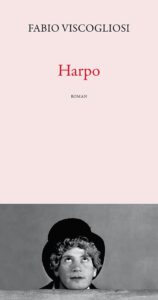
Despite the diversity of their narrative forms, the four novels paint a shared panorama of the comic as a paradoxical dispositif situated between production, loss, and reflection: In Fabio Viscogliosi’s *Harpo* (2020) as a physically acquired craft—almost passed down through the family—that remains bound, however, to external frameworks (brotherly bonds, dramaturgy, the logic of production) and is completely suspended at the moment of amnesia; Karine Tuil radicalizes this ambivalence by staging the comic in "Quand j’étais drôle" (2005), she portrays the comic as both a compulsion and an inescapable linguistic form, so that the narrative voice articulates its own failure in the mode of a punchline, thereby performatively subverting the thesis of "lost humor"; David Foenkinos reverses the initial premise in *Je suis drôle* (2026) by showing that it is not comedy, but rather its absence —more precisely: a presence that can be read as "tragic“—generates social and artistic success, thereby exposing the comic as a false promise without abandoning the underlying logic (being loved through the production of affect); Finally, in *Des inconnus à qui parler* (2025), transfers the comic into an explicit discursive space, where it appears as a process that can be taught and analyzed, yet whose methodological dissection (deconstruction, variation, theorization) stands in tension with its effect. This essay does not rank these four models hierarchically but reads them as complementary "theories in narrative form": Comedy is, at times, practice without theory (Viscogliosi); at other times, theory in the mode of self-contradiction (Tuil); at still other times, the negative counterpoint to an affective economy (Foenkinos); and at yet other times, an explicitly epistemological system (Bordas). The argument reveals recurring structures—such as the link between the comic and biographical deficits or its dependence on institutional contexts—and interweaves these with overarching models (Bergson’s mechanics, Girard’s equilibrium, Le Breton’s corporeality, Flandrin’s sociology), so that the individual analyses do not remain additive but illuminate one another. This becomes particularly evident in the key scenes: Harpo’s loss of his comic identity reveals the comic as an effect of framing; Sandre’s diagnosed "double vision“ makes visible the inner split that both enables and destroys comedy; Gustave’s rejection as "not drôle" marks the turning point of an entire value system; Dorothy’s reflection on the question as a tool presents the comic as an independent form of knowledge. Overall, the essay follows a clear line of argument: It shifts the question "What is the comic?“ to "Under what conditions does it arise, function, and fail?“—and derives its analytical precision precisely from this, because the comic appears not as a stable property but as a fragile relationship between body, language, audience, and institution.

To the article
The Earth's Vertigo: Camille de Toledo

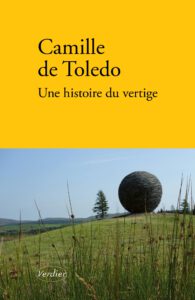
The overview of Camille de Toledo’s work—under the guiding concept of "Vertige"—unfolds a diagnosis of the present that is as much literary as it is epistemological, and which the review characterizes as a genuinely ecological figure of thought: Taking as its starting point the sensually perceptible reality of recurring heat waves, "vertigo" is interpreted not as merely subjective unease, but as a symptom of a destabilized Earth whose geophysical and semantic foundations are eroding simultaneously. The review’s argument follows a dual trajectory, which it identifies as structuring Toledo’s entire body of work: on the one hand, the introspective-poetic reflection on language as an unstable foundation (particularly in "L’inquiétude d’être au monde" and "Une histoire du vertige"), and on the other hand, the institutional translation of this crisis into legal and political forms (primarily in "Le fleuve qui voulait écrire" and "L’internationale des rivières"). The review interprets these two strands not as progress, but as a pendulum swing: "Vertige" functions simultaneously as a poetological category (the instability of signs, the "pharmakon" of language) and as an ethical-political imperative that demands new forms of recognition for nonhuman actors. Particularly striking is the thesis that Toledo does not narratively domesticate the ecological crisis, but rather formally reproduces it: The hybridity of genres, the shift from monological speech to polyphonic listening, and finally to speculative "fiction instituante" appear as aesthetic counterparts to a state of the world in which "the ground is slipping away." The review interprets this formal dynamic as a conscious rejection of any "consolation" and thus as an alternative to apocalyptic or technicist climate narratives; instead, a "poetics of endurance" emerges that does not dispel the vertigo but renders it productive—whether in the literary self-questioning of the "homo narrans" or in the vision of a justice that grants rivers a voice and the power to act. Overall, the argument is compelling due to its close interweaving of textual analysis, genre theory, and ecological hermeneutics: it demonstrates that Toledo’s work not only deals with climate change but also enacts its epistemic demands at the level of form, language, and institution.

To the article
Missed Calls, Found Language - Nassera Tamer

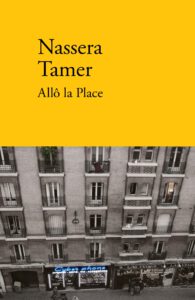
The present text reads Nassera Tamer's "Allô la Place" (Verdier, 2025) as an auto-fictional, formally hybrid novel that elevates the telephone call – concisely framed by Jacques Derrida's dictum on the „spectral“ nature of voice – to a guiding metaphor for diasporic existence: it recounts a first-person narrator living in Paris who, in attempting to relearn her parents„ Darija, processes less a linguistic deficiency than an existential one, namely the damaged relationship to her origins and parents, disrupted by migration, social mobility, and shame, whose unanswered call forms the actual dramatic core. Instead of a linear plot, the novel unfolds a montage structure of short sequences, documentary digressions, and inventory-like display window lists, which condense into a poetics of the fragment and “connection in rupture„: the language tandem with Mer, living in Casablanca, functions as a mirror constellation in which questions of gender, mobility, and inequality converge, while public payphones mark themselves as heterotopic threshold spaces, charting a topography of the in-between. The analysis highlights that Tamer stages technical communication forms – from audio cassettes to apps – not as a narrative of progress, but as an archaeology of failed closeness, in which the “appel en absence" becomes the signature of a subject suspended between languages and places; at the same time, it interprets the dense metaphorical fields (water, wound, signal, repair) and intertextual references as elements of an autopoetological reflection that understands writing itself as a precarious act threatened by disappearance. Overall, the argument consistently focuses on the guiding metaphor of the interrupted connection and its unfolding in form, motif, and media reflection.

To the article

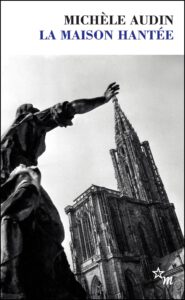
An apartment building in Alsace and ghosts of history: Michèle Audin

This article presents Michèle Audin’s novel *La Maison hantée* (2025) as a striking example of a "roman croisé," in which documentary research, narrative imagination, and multiple temporal levels intertwine: Beginning with her move into a Strasbourg apartment building in 1992, a first-person narrator follows in the footsteps of former residents and, drawing on archival materials, chance discoveries, and careful reconstructions, a web of life stories that focuses particularly on the Caron-Fischbach family from 1930 to 1946; against the backdrop of the Nazi annexation of Alsace, questions of belonging, language coercion, and administrative violence—with the Jewish residents of the building and their gradual disappearance from the records standing out as an oppressive void that can be neither narratively resolved nor historically fully elucidated. The narrative movement resembles a tentative traversal of spaces and times—stairwells, apartments, archives—in which voices overlap and contrasts are not resolved but kept visible. Against this backdrop, the essay argues that Audin develops a poetics of evidence-gathering that does not level the coexistence of fact and fiction but rather highlights it: First, the historical novel is identified as a construct through the narrator’s consistent self-reflexivity, in which imaginative additions are explicitly marked and thus become epistemologically transparent; second, Alsace appears as a paradigmatic space of intersecting identities, in which national attributions—particularly under the conditions of Nazi language policy—are forcibly imposed and at the same time experienced in all their fragility; third, the silence of the sources—for example, in the case of the erased Jewish lives—proves not to be a mere deficit, but rather a central vehicle of meaning that marks the limits of historical knowledge and calls for an ethically reflective form of remembrance. Thus, the essay makes a plausible case that "La Maison hantée" conceives of history not as a linear narrative, but as a polyphonic structure riddled with ruptures, in which the past reveals itself only through a process of approximation and intersection.

To the article

Water, Heat, Depth: On the Poetics of the French Summer Novel

This article was written at 37°C. It brings together sixteen recent French-language novels into a polyphonic topography of water—from Parisian public swimming pools to private pools and North American residential complexes, all the way to lake landscapes and the coasts of the Atlantic and the Mediterranean. In vivid scenes—the hesitation on the five-meter board, an elderly man’s first plunge into the water after decades, sitting motionless at the edge of an unused pool, or the exhausted resurfacing after a long swim in the ocean —water becomes tangible as a fundamental bodily experience: cooling, buoyant, resistant. The texts show how, in the moment of bathing, social orders shift and simultaneously become visible: bodies become legible; class differences, desires, and exclusions come to light, while the water creates, for a few moments, an equality that immediately crumbles again on land. - At the same time, the wet element functions as both a repository and a trigger for memory: the smell of chlorine, salt on the skin, or the recurring blue of a pool evoke childhood, first love, or experiences of loss. Time and again, the novels return to adolescence, to moments of initiation during a summer in which a leap into the water determines one’s sense of belonging, or a failure to leap marks a turning point in life. Other texts depict water as a site of existential borderline experiences—as a space for coping with grief, illness, depression, or the confrontation with death, where language fails and only the body can react. Between the public swimming pool, which functions as a social microcosm, and the open sea, which embodies indifference and overwhelming power, a poetics of water thus unfolds that neither reduces the element to a metaphor nor leaves it purely naturalistic: It is at once a concrete substance and a resonant space in which life becomes concentrated. Summer appears here as an accelerated, heated temporal form in which, through contact with water, transitions take place—between childhood and adulthood, closeness and loss, control and loss of control—and in which the characters are, for a moment, both laid bare and withdrawn from themselves.

To the article

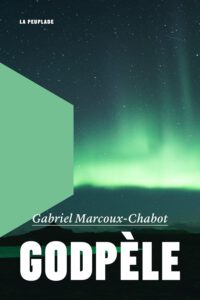
Zwischen Joual und Norm: Sprachpolitik und Erinnerung bei Gabriel Marcoux-Chabot

Kanada bildet den kulturellen und sprachpolitisch-poetologischen Hintergrund der in der Rezension analysierten Konstellation in Gabriel Marcoux-Chabots "Godpèle" (2025). Im Zentrum steht die Figur la Floune, die nach einer existenziellen Flucht in die winterliche Wildnis ein Tagebuch verfasst und dabei das verdrängte Trauma ihrer Gemeinschaft – den Kannibalismus während eines katastrophalen Winters – schrittweise freilegt. Die Interpretation arbeitet heraus, dass dieses narrative Geschehen untrennbar mit der zweisprachigen Anlage des Textes verbunden ist: Die Gegenüberstellung von phonetisch notiertem Joual und standardisiertem Französisch bilden Reflexionsinstrumente über Sprachverlust, kulturelle Normierung und die Gewalt der sprachlichen Glättung. Indem die standardsprachliche Version die mündliche Rede scheinbar klärt, reproduziert sie zugleich das Verschweigen des Traumas. Daraus entwickelt die Rezension die These, dass "Godpèle" Sprache selbst als Ort von Wahrheit und Verdrängung inszeniert: Erst im Übergang vom gemeinschaftlich regulierten Sprechen zum individuellen Schreiben wird das Verborgene artikulierbar. Diese Leitidee verfolgt die Analyse durch Figuren, Raumordnung und Metaphorik und deutet Schreiben als ambivalente Praxis zwischen Erkenntnis und Begrenzung. Die Argumentation führt zur Einsicht, dass erst das ausgesprochene Wort – das Durchbrechen des kollektiven Schweigens – die Möglichkeit einer ethisch ausgerichteten Zukunft eröffnet.

To the article

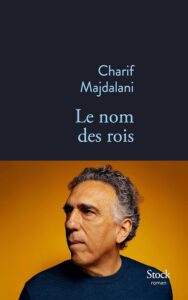
Die Könige haben keine Namen mehr – Frankophonie im Zerfall des Libanon: Charif Majdalani

Charif Majdalanis Roman "Le nom des rois" (Stock, 2025), entwirft die Kindheit eines Beiruter Jungen am Vorabend des Bürgerkriegs als ein Spannungsfeld zwischen ästhetischer Weltflucht und historischer Zumutung: Während draußen die Ordnung zerfällt, verschanzt sich das Ich in den klingenden Namen längst versunkener Könige, die es wie Trophäen in Hefte einträgt – ein „onomastisches Erzittern“, das die Realität übertönt. Im Zentrum der Handlung steht die enge Freundschaft zu einem Mitschüler, die ersten Liebeserfahrungen und die allmähliche Konfrontation mit einer politischen Gewalt, die die imaginären Gegenwelten des Erzählers zerschlägt. Diese genealogische Imagination bildet die zentrale These des Romans: Der Name, die Sprache, ja die französisch geprägte Kultur selbst erzeugen eine schillernde Ersatzwelt, deren Schönheit jedoch an der Gewalt der Geschichte zerbricht. Majdalani konkretisiert diesen Bruch in eindrücklichen Bildern – dem Duft alter Larousse-Enzyklopädien, den mondänen Salons Beiruts, den flirrenden Berglandschaften Massiafs –, die allmählich vom Echo der ersten Schüsse, vom Zerfall der sozialen Rituale und vom Verlust der ersten Liebe überlagert werden. In der Kritik häufig mit Proust verglichen, erscheint der Roman so als elegische Diagnose einer Klasse, die im Spiegel Frankreichs lebte und die Katastrophe nicht sehen wollte: Der Übergang vom Sammeln der Königsnamen zum Abfeuern einer echten Waffe markiert das Ende der poetischen Illusion und den Eintritt in eine Geschichte, die nicht mehr erzählbar, sondern nur noch erlitten ist.

To the article

Putin's Russia, Homophobia, and Paper Frenchmen with Sergueï Shikalov

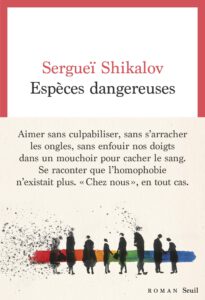
The essay reads Sergueï Shikalov's "Dangerous Species" (Seuil, 2024) as a poetologically highly reflexive text about homophobia in post-Soviet Russia, in which an entire generation of gay men is made visible, caught between a brief historical "spring“ and a renewed authoritarian ice age. At its core is less a linear plot than a collective form of experience articulated in the indefinite "one“: a litany-like, fragmented discourse that suspends individual biography in favor of a shared existence marked by violence, shame, and precarious desire. It is precisely this refusal of the self that becomes an aesthetic strategy, documenting and simultaneously counteracting disappearance by transforming anonymization into a procedure of witnessing. The thematization of homophobia appears not only as a social reality – in the form of assaults, institutional indifference, and political repression – but as a discursive order that classifies, devalues, and displaces bodies from the speakable. Crucially, the novel formulates this experience in learned French, which, as a medium of exile, opens up a paradoxical space: distance and the possibility of articulation coincide, making the unspeakable speakable for the first time. Against this backdrop, the question of French citizenship also takes shape: while it marks a legal and existential break, it remains – as Shikalov's essay "Paper Frenchmen" (2025) shows – ambivalent, in that belonging continues to be conditional and the logics of exclusion are perpetuated in a new form.

To the article

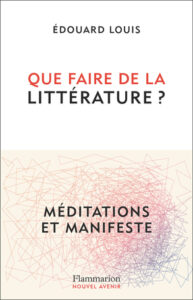
The Intimate as a Political Technique: Theses on Édouard Louis

This article reads Édouard Louis's work as a closed poetological project and asks how his texts transcend the boundaries between autobiographical narration, sociological analysis, and political intervention. Starting from the concepts of 'confrontational literature„ and “intimism,„ which Louis developed in his recent conversation volume “Que faire de la littérature?" (2025), ten interpretive approaches are presented that highlight the formal procedures, thematic constants, and strategic shifts in his writing. At the center is the question of whether one can observe a maturation of the author over the course of his work, or rather a refinement of his literary means – and how Louis, with his texts, not only seeks to tell stories but also to force his readers to see what they all too easily repress.

To the article

From Stigma to Self-Empowerment: Arabité in Aïda Amara

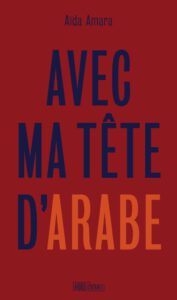
Aïda Amara's novel "Avec ma tête d’arabe" tells the story of a young French-Algerian journalist whose identity is shaken by the Paris terrorist attacks of November 13, 2015. Starting from this traumatic event, the text unfolds a multi-layered journey into family and colonial history, reaching back from the narrator's Parisian childhood to the Kabylia region during the Algerian War of Independence. The review shows that the novel portrays identity not as a stable given, but as a fragile and continuous reconstructive effort: The trauma destroys previous self-assurance and forces the narrator to re-examine her origins, her family traditions, and her position between France and Algeria. The analysis focuses on the sophisticated interweaving of three time levels, the female genealogy of resistance, the significance of language and wit as forms of self-assertion, and the function of humor as a strategy against powerlessness and fear. Thus, "Avec ma tête d’arabe" appears as a novel that is as personal as it is political, connecting individual injury with postcolonial memory and understanding writing itself as an act of reclaiming a multi-voiced, contradictory, and yet capable self.

To the article

The Work That Is Missing: Xavier Garnier and Mohamed Mbougar Sarr in Dialogue

Xavier Garnier's "Quels lieux pour les littératures en langues africaines?" and Mohamed Mbougar Sarr's novel "La plus secrète mémoire des hommes" (The Most Secret Memory of Men) both revolve around the question of the conditions under which African literature becomes visible – and what happens to writers who evade the expectations of the French literary establishment. In his study, Garnier reconstructs the suppressed history of African-language literatures and shows how strongly Francophone texts are influenced by languages such as Wolof, Gikũyũ, or Kiswahili, even though these generally remain invisible in the international literary scene. Sarr recounts the same issue as a literary quest: the young Senegalese author Diégane Latyr Faye follows the trail of the enigmatic T.C. Elimane, whose celebrated 1938 novel disappears after fierce racist and exoticizing reactions. The essay reads both books as complementary counterparts: Garnier's theoretical concepts – for instance, literature as an „ecosystem“ of languages, places, and institutions – make it understandable why Elimane is simultaneously admired and excluded in the novel, while Sarr translates Garnier's abstract considerations into concrete scenes, such as the fictionalized Parisian newspaper reviews or the multilingual passages in Wolof and Serer. The analysis is particularly strong where it shows that African authors in the Francophone sphere still navigate between two contradictory expectations today: having to be simultaneously „authentically African“ and literarily universal. It is precisely from this tension that the essay develops a precise and vivid interpretation of Sarr's novel as a reflection on literary recognition, linguistic belonging, and the possibility of writing under postcolonial conditions.

To the article

Trilogy of Masculinity: Franck Mignot

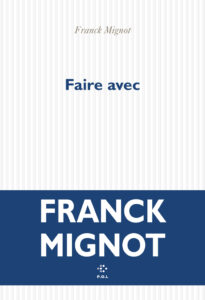
The essay reads Franck Mignot's three novels, "Mollesse" (2023), "Les Viandards" (2025), and "Faire avec" (2026), as a cohesive narrative project that outlines a genealogy of exhausted masculinity. Starting from the programmatic titles, which signify flaccidity, predatory behavior, and resigned arrangement, the analysis demonstrates how Mignot portrays the crisis of male roles not as a spectacular collapse, but as a slow process of enervation. The central thesis is that the three novels trace a movement from eruptive acts of violence to an exhausted, permanent existence: from the murdering Samuel in "Mollesse" to the infantile observer in "Les Viandards," and finally to the weary, enduring Bertrand in "Faire avec." The essay follows this development not chronologically by work, but along recurring structural elements – muteness, desire, fatherhood, gender asymmetry, spatial poetics, and writing practices – and shows how the books mutually comment on and illuminate each other towards a narrative study of manhood. Particular emphasis is placed on the analysis of Mignot's laconicism: the sober, paratactic prose appears not merely as a stylistic device, but as an ethical stance in a world where the characters have lost all stable value systems. The essay argues that Mignot's novels systematically refuse the classical Bildungsroman, instead presenting a „chronicle of the unchangeable“ where development is replaced by repetition. It is precisely in this that the trilogy's radicality lies: not catharsis or healing, but the exhausted „getting by with what remains“ forms the horizon of these texts. By reading Mignot's work simultaneously as a social chronicle, a poetics of silence, and a reflection on modern masculinity, the study makes visible how closely form, language, and theme are intertwined in this trilogy.

To the article

Society in a Mode of Fragmentation - Literature as a Response to the Crisis of Representation: Robert Lukenda

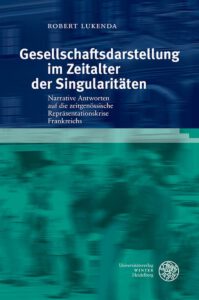
Robert Lukenda's study, "Representing Society in the Age of Singularities: Narrative Responses to France's Contemporary Crisis of Representation," offers a comprehensive analysis of how contemporary French literature responds to the experience of „society“ as an increasingly elusive cohesive whole. Starting with scenes such as Annie Ernaux's ethnographic gaze upon the supermarket or Éric Vuillard's reconstruction of nameless revolutionary actors, Lukenda demonstrates that literature intervenes where political and media discourses either distort or entirely fail to grasp social reality. In a broad initial theoretical section, he unfolds France's historical and contemporary crisis of representation—from the tension between the republican claim to unity and social inequality to fragmentation into ’France périphérique„ and metropolises—before analyzing literary responses in the second part: auto-socio-biographical self-examinations (Ernaux, Eribon), documentary reconstructions (Vuillard), collective narrative projects (“Raconter la vie"), and serial formats. The review argues that Lukenda convincingly identifies literature as a medium of "mediation„ that makes social relations visible where classical forms of representation fail; at the same time, it critically emphasizes that this literature often privileges the perspective of the “invisible,„ leaving elites, political institutions, and aesthetic specificities underexposed. In these works, an image emerges of a France that inadequately describes itself—and of a literature that makes this gap visible without being able to fully close it.

To the article

Ein Thriller als Corneille-Tragödie: Patrick Besson

Patrick Bessons Kriminalroman "Presque tout Corneille" (Stock, 2025, zit. als PTC) funktioniert wie eine Tragödie von Corneille, die sich als Urlaubskomödie verkleidet hat: Georges Charpy, ein entlassener Pariser Journalist, trifft seinen ehemaligen Chef im Hotel Aiglon auf Korsika wieder und beginnt, ihn bei jedem erdenklichen Spiel zu demütigen – Schwimmen, Tennis, Schach, Tischtennis –, getrieben von seiner korsischen Frau Colomba, die wie Mérimées gleichnamige Heldin den Mann zur Vendetta drängt, ohne es je auszusprechen, eine Machtstruktur, die der Aufsatz als das eigentliche Zentrum der Handlung identifiziert. Währenddessen liest Lisa, die Tochter des Hoteldirektors, am Poolrand chronologisch das Gesamtwerk Corneilles – eine Tragödie pro Tag –, und ihre Zitate kommentieren das Geschehen wie ein klassischer Chor: "Qui vit haï de tous ne saurait longtemps vivre" (aus Cinna). "Qui se laisse outrager mérite qu'on l'outrage" (aus Héraclius). Sätze, die Corneilles zentrales Thema umkreisen, nämlich die Frage, ob der Mensch das, was er will, mit dem, was er darf, je in Einklang bringen kann, und die im Roman die Funktion haben, die Mordhandlung als moralisch vorherbestimmt erscheinen zu lassen, nicht als Ausnahme, sondern als Konsequenz. Der Chef wird enthauptet aufgefunden, später auch eine zweite Figur; Georges bekennt beide Morde – den ersten aus Ehre, den zweiten aus Eifersucht –, und der Aufsatz liest diesen doppelten Mord als Beleg dafür, dass Besson nicht Corneille in den Thriller einführt, sondern zeigt, dass der Thriller dieselbe moralische Architektur besitzt wie das klassische Theater: Schuld entsteht dort, wo der Wille, sich Genugtuung zu verschaffen, stärker ist als die Vernunft, die zur Mäßigung mahnt, und Lisa, die am Ende Corneille abbricht – "Oui : trop de sang." –, vollzieht damit jene Geste, die den Kern des Romans markiert: Literatur kann die Gewalt kommentieren, aber nicht aufhalten.

To the article

War as Legacy: On the Systematics of Transgenerational Imprinting in Julia Weidmann

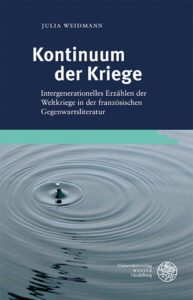
The review presents Julia Weidmann's study "Continuum of Wars: Intergenerational Narration of the World Wars in Contemporary French Literature" (Winter, 2025) as a fundamental, comparative investigation of a central phenomenon in contemporary French literature: the intergenerational narration of the World Wars. The starting point is the observation that later generations – from the „wound“ to the „heritage“ generation – reconstruct familial war experiences in literary form, mediating between archival research and imagination. To this end, Weidmann develops an independent model of a „war continuum“ that replaces traditional numerical generation categories with a metaphorical scaling oriented toward trauma. She operationalizes this concept in a four-step analytical method, which she applies to a diverse corpus of authors (including Claude Simon, Patrick Modiano, Ivan Jablonka, Anne Berest). The review particularly praises the methodological clarity, the differentiated close readings, and the demonstration of recurring narrative structures across generations, but also highlights limited weaknesses, such as a certain schematization in the comparative perspective and the comparatively marginalized treatment of aesthetic details. Overall, the study appears to be a substantial contribution to literary memory studies, providing a robust toolkit for analyzing transgenerational memory while also opening up new perspectives for researching future narrative forms.

To the article

Brücken bauen, Gräben vertiefen: Pauline Dreyfus

Pauline Dreyfus’ "Un pont sur la Seine" (2025) entfaltet, ausgehend von der Katastrophe eines Fährunglücks im Jahr 1828, die über Generationen gespannte Geschichte zweier durch die Seine getrennter Dorfgemeinschaften, deren Schicksale sich im Bau, der Zerstörung und dem Wiederaufbau einer Brücke verdichten: Anhand der Familie Vernet und ihrer genealogischen Verzweigungen verfolgt der Roman die Transformation vom agrarischen Milieu zur Industriegesellschaft und weiter in die postindustrielle Gedächtniskultur, wobei historische Einschnitte – Kriege, Volksfront, Okkupation, Deindustrialisierung – als strukturierende Kräfte in die Lebensläufe eingeschrieben werden. Zugleich insistiert die Erzählung auf ihrer eigenen Künstlichkeit: Figuren erscheinen weniger als psychologisch singuläre Individuen denn als typisierte Träger sozialer Positionen, deren Konflikte – etwa zwischen Winzer und Fabrikarbeiter, Résistance-Erbin und Erinnerungspolitiker – die Persistenz gesellschaftlicher Spaltungen sichtbar machen. Der Aufsatz arbeitet heraus, wie das zentrale poetische Prinzip des Romans in der mehrdimensionalen Konstruktion der Brücke liegt: als historisches Objekt, topographische Achse, soziales Diagnoseinstrument und philosophische Metapher, die im Sinne einer selbstreflexiven Geschichtspoetik gerade nicht Versöhnung stiftet, sondern Differenz produziert und sichtbar macht. In dieser Dialektik von Dokumentation und Fiktion, von historischer Genauigkeit und ironischer Distanz erweist sich Dreyfus’ Text als bewusste Fortschreibung und zugleich kritische Brechung der Tradition des historischen Gesellschaftsromans: Er demonstriert, dass die großen Narrative von Fortschritt und Verbindung an den mikrosozialen Realitäten scheitern und dass jede Form von Geschichtserzählung – im Roman wie im von ihm entworfenen Museumsprojekt – notwendig ihre eigene Konstruktionslogik mitreflektieren muss.

To the article

Die Sitcom-Diktatur: politisches Denken, literarische Form, Machiavelli und Giorgia Meloni bei Hélène Frappat

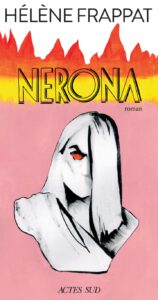
Der Roman "Nerona" (2025) von Hélène Frappat entwirft die Herrschaft einer rechtspopulistischen Diktatorin als ein zugleich groteskes und erschreckend präzises Modell politischer Gegenwart: In einer namenlosen europäischen Nation regiert Nerona mittels Dekreten und medialer Dauerinszenierung, während eine polyphone, fragmentierte Erzählstruktur – Reden, Interviews, prophetische Gesänge, Filmszenen – die Gleichzeitigkeit von Macht, Gewalt und Verdrängung sichtbar macht; zentrale Motive sind die Mythisierung der eigenen Herkunft, die systematische Konstruktion von „Feinden im Inneren“, die Pervertierung humanitärer Diskurse etwa im Migrationslager sowie die Eskalation zur apokalyptischen Selbstzerstörung, die in der Figur des Matricidiums und im Nero-Topos kulminiert. Die Rezension argumentiert dabei, dass Frappats literarische Form selbst Erkenntnis produziert: Indem sie Populismus als „Sitcom“ modelliert – als endlose Wiederholung affektiver und rhetorischer Muster ohne Lernfähigkeit –, verbindet sie Gattungspoetik mit politischer Theorie; zugleich liest die Rezension den Roman als machiavellistische Parodie, in der klassische Begriffe wie „virtù“ oder „fortuna“ in zynische Managementlogiken überführt werden. Die Verschränkung von Diskursanalyse und Ästhetik wird herausarbeitet: Die Vielstimmigkeit fungiert als demokratischer Gegenentwurf zum monologischen Populismus, während die Figur Neronas als Verdichtung realer politischer Akteurinnen (insbesondere Giorgia Meloni) lesbar wird, ohne in bloße Satire zu verfallen. Insgesamt zeigt die Interpretation, dass Frappats Roman weniger eine dystopische Übertreibung als vielmehr eine Diagnose ist: Populistische Herrschaft erscheint als ein Regime der Sprache und Wahrnehmung, dem die Literatur durch ihre formale Komplexität eine kritische Gegenwahrnehmung entgegensetzt.

To the article

Brennende Ränder oder Warum Jeanne Rivière mit Nicolas Mathieu schläft

Jeanne Rivières „Lorraine brûle“ (Gallimard, 2025, zit. als LOB) zeichnet das Bild einer namenlosen Ich-Erzählerin Anfang vierzig, die im nachindustriellen Lothringen zwischen Metz und Nancy ein unsicheres, von Körpererfahrungen, Mutterschaft und subkulturellen Praktiken geprägtes Leben führt: Als alleinerziehende Mutter des zwölfjährigen Tarzan, Büroangestellte und Schlagzeugerin in Punkbands bewegt sie sich durch eine Landschaft aus stillgelegten Hochöfen, Supermärkten, Schwimmbädern und illegalen Konzerten, während Freundinnen wie die radikal selbstbestimmte Lynn, die anarchische Nora und vor allem die todkranke Baya ein weibliches Gegenbild zur bürgerlichen Ordnung bilden; Bayas Sterben an Bauchspeicheldrüsenkrebs bildet den gefühlsmäßigen Mittelpunkt einer locker gefügten Jahreschronik, die von Januar bis Sommer reicht und deren episodische Struktur durch wiederkehrende Schwimm-Passagen rhythmisiert wird, sodass sich Tod (körperlicher Verfall) und Bewegung (Körper im Wasser) als unterschwellige Achse überlagern. Vor diesem Hintergrund liest der Aufsatz den Roman als programmatische „Poetik der Zersplitterung“: Die formale Aufsplitterung – abrupte Kapitel, Wechsel der Tonlagen, Mischung aus Autofiktion, Essay, Reportage und Lyrik – erscheint nicht als künstlerischer Mangel, sondern als passende Antwort auf eine durch Deindustrialisierung, Unsicherheit und Verlust zerrissene Wirklichkeit, in der Zusammenhalt selbst zur Fiktion geworden ist; besonders hervorzuheben ist dabei die These, dass die Gleichwertigkeit unterschiedlicher Elemente (Alltag und Katastrophe, Komik und Trauer, Körperdetail und Gesellschaftsanalyse) eine unausgesprochene politische Haltung formuliert, die Hierarchien ablehnt und das Randständige ins Zentrum rückt. Indem die Argumentation konsequent Form und Inhalt kurzschließt – die Zersplitterung des Lebens spiegelt sich in der Zersplitterung des Erzählens –, gewinnt sie ihre größte Überzeugungskraft dort, wo sie das ästhetische Aufeinandertreffen der Tonlagen, die Körperlichkeit (Blut, Krankheit, Sexualität) und die raumbildende Funktion Lothringens als miteinander verflochtene Ebenen liest; zugleich zeigt sie, dass das Schreiben selbst im Roman als Mittel zum Überleben und zur Trauerbewältigung wirkt, das die Zersplitterung nicht überwindet, sondern nutzbar macht. So erscheint LOB in der Deutung der Rezension weniger als Darstellung eines sozialen Umfelds denn als radikal gegenwärtige Suche nach Formen, in der die Zersplitterung zu einer widerständigen Lebensweise und zur eigentlichen dichterischen Einheit wird.

To the article

Rückkehr aus dem Tal der digitalen Simulation zur Poesie des Staubs: Arnaud Sagnard

Arnaud Sagnards "La Vallée" (2025, zit. als LV) verfolgt mit der Geschichte des Bauernsohns und Programmierers Thomas Hèvre eine Bewegung von der materiellen Welt des Morvan über die entkörperlichte Tech-Sphäre von Paris und dem Silicon Valley, wo sich die zentrale These des Romans erfüllt, dass das „Tal“ weniger ein Ort als ein geistiger Aggregatzustand ist, der die Wirklichkeit absorbiert und als Simulation zurückgibt, bis in die radikale Leere der Wüste von Amargosa; im Zentrum steht dabei ein neuronales Implantat, das Fiktion und Realität verschmilzt und so die letzte Grenze menschlicher Erfahrung aufhebt, während Thomas – zunächst als genialer „Cheat Code“ der Maschine – allmählich erkennt, dass er an der Entstehung einer unsichtbaren Ideologie der Entmaterialisierung beteiligt ist, die den Menschen in ein körperloses Phantom verwandelt, bis er sich dieser Logik entzieht und in der Wüste eine fragile Gegenwelt aus Präsenz, Stille und unvermittelter Erfahrung sucht. Der Aufsatz argumentiert, dass der Roman nicht nur eine kulturkritische Dystopie, sondern zugleich ein Text ist, der die Bedingungen des Erzählens im Zeitalter digitaler Totalintegration reflektiert, indem er die Oppositionen von Code und Mythos, Kommunikation und Schweigen, Innen- und Außenwelt systematisch in Figurenkonstellation, Raumstruktur und Metaphorik durcharbeitet; aufschlussreich ist dabei die Deutung des Silicon Valley als „Depression“ im geologischen, psychologischen und ökonomischen Sinn, wodurch die Kritik an der Tech-Industrie eine existentielle Tiefendimension erhält, während die Analyse zugleich plausibel macht, dass der Roman seine eigene Antwort performativ gibt: als literarischer Raum, der gerade durch Distanz, Unschärfe und Nicht-Totalität eine Erfahrung ermöglicht, die kein Implantat simulieren kann.

To the article

Bourdieu's Narrator: Theory Parody and Societal Diagnosis in Fabrice Pliskin

After a robbery, jeweler Antonin Firminy shoots one of the fleeing perpetrators and, upon his release from prison, becomes—under a new identity in Paris—a self-appointed avenger of the „oppressed,“ legitimizing his actions through a radicalized interpretation of sociology. At the same time, the journalist Mandrillon pursues the case, becomes entangled in his own moral contradictions, and ultimately turns Suburre’s story into a successful book that offers more interpretation than clarification. Fabrice Pliskin’s novel *Le fou de Bourdieu* (2025, Le Cherche Midi) can be summarized as a case study—as narratively dense as it is intellectually incisive—on the dangerous appropriation of theory: At the center is Firminy, a man who, following a deadly act of violence and a traumatic stint in prison, undergoes a radical reinvention under the name Suburre by adopting Pierre Bourdieu’s sociology not as an analytical tool but as an existential system of interpretation; From this reading, he develops a worldview that translates social determination into moral exoneration and ultimately into a program of counter-violence, which manifests itself in petty criminal acts, symbolic acts of destruction, and ideological manifestos, while, in parallel, the journalist Mandrillon observes, processes, and exploits the events literarily, without ever adopting a fixed standpoint. The novel undertakes less a refutation of sociological theory than a demonstration of its performative distortion: Concepts such as habitus, domination, or symbolic violence are absolutized in the mode of ressentiment and translated into action, thereby creating a dialectical structure in which explanation becomes justification; particularly compelling is the analysis of the constellation of characters as a reflection of two forms of evading responsibility —Suburre’s ideological radicalization and Mandrillon’s rhetorical self-relativization—which allows the novel to be read as a parable of a discursively overheated society in which language replaces action and theory becomes a projection screen. Furthermore, by interpreting the text’s formal structure as an "experimental setup," the article demonstrates that the novel’s impact stems not primarily from its plot, but from the consistent escalation of a line of thought that detaches itself from reality while simultaneously distorting it.

To the article