Four novels about the comical: Karine Tuil, Camille Bordas, Fabio Viscogliosi, David Foenkinos
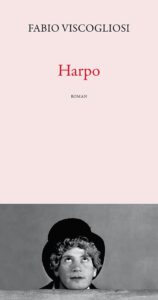
Despite the diversity of their narrative forms, the four novels paint a shared panorama of the comic as a paradoxical dispositif situated between production, loss, and reflection: In Fabio Viscogliosi’s *Harpo* (2020) as a physically acquired craft—almost passed down through the family—that remains bound, however, to external frameworks (brotherly bonds, dramaturgy, the logic of production) and is completely suspended at the moment of amnesia; Karine Tuil radicalizes this ambivalence by staging the comic in "Quand j’étais drôle" (2005), she portrays the comic as both a compulsion and an inescapable linguistic form, so that the narrative voice articulates its own failure in the mode of a punchline, thereby performatively subverting the thesis of "lost humor"; David Foenkinos reverses the initial premise in *Je suis drôle* (2026) by showing that it is not comedy, but rather its absence —more precisely: a presence that can be read as "tragic“—generates social and artistic success, thereby exposing the comic as a false promise without abandoning the underlying logic (being loved through the production of affect); Finally, in *Des inconnus à qui parler* (2025), transfers the comic into an explicit discursive space, where it appears as a process that can be taught and analyzed, yet whose methodological dissection (deconstruction, variation, theorization) stands in tension with its effect. This essay does not rank these four models hierarchically but reads them as complementary "theories in narrative form": Comedy is, at times, practice without theory (Viscogliosi); at other times, theory in the mode of self-contradiction (Tuil); at still other times, the negative counterpoint to an affective economy (Foenkinos); and at yet other times, an explicitly epistemological system (Bordas). The argument reveals recurring structures—such as the link between the comic and biographical deficits or its dependence on institutional contexts—and interweaves these with overarching models (Bergson’s mechanics, Girard’s equilibrium, Le Breton’s corporeality, Flandrin’s sociology), so that the individual analyses do not remain additive but illuminate one another. This becomes particularly evident in the key scenes: Harpo’s loss of his comic identity reveals the comic as an effect of framing; Sandre’s diagnosed "double vision“ makes visible the inner split that both enables and destroys comedy; Gustave’s rejection as "not drôle" marks the turning point of an entire value system; Dorothy’s reflection on the question as a tool presents the comic as an independent form of knowledge. Overall, the essay follows a clear line of argument: It shifts the question "What is the comic?“ to "Under what conditions does it arise, function, and fail?“—and derives its analytical precision precisely from this, because the comic appears not as a stable property but as a fragile relationship between body, language, audience, and institution.
To the article