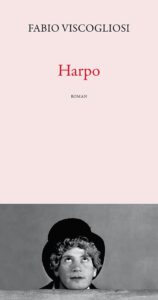
Four novels about the comical: Karine Tuil, Camille Bordas, Fabio Viscogliosi, David Foenkinos

Despite the diversity of their narrative forms, the four novels paint a shared panorama of the comic as a paradoxical dispositif situated between production, loss, and reflection: In Fabio Viscogliosi’s *Harpo* (2020) as a physically acquired craft—almost passed down through the family—that remains bound, however, to external frameworks (brotherly bonds, dramaturgy, the logic of production) and is completely suspended at the moment of amnesia; Karine Tuil radicalizes this ambivalence by staging the comic in "Quand j’étais drôle" (2005), she portrays the comic as both a compulsion and an inescapable linguistic form, so that the narrative voice articulates its own failure in the mode of a punchline, thereby performatively subverting the thesis of "lost humor"; David Foenkinos reverses the initial premise in *Je suis drôle* (2026) by showing that it is not comedy, but rather its absence —more precisely: a presence that can be read as "tragic“—generates social and artistic success, thereby exposing the comic as a false promise without abandoning the underlying logic (being loved through the production of affect); Finally, in *Des inconnus à qui parler* (2025), transfers the comic into an explicit discursive space, where it appears as a process that can be taught and analyzed, yet whose methodological dissection (deconstruction, variation, theorization) stands in tension with its effect. This essay does not rank these four models hierarchically but reads them as complementary "theories in narrative form": Comedy is, at times, practice without theory (Viscogliosi); at other times, theory in the mode of self-contradiction (Tuil); at still other times, the negative counterpoint to an affective economy (Foenkinos); and at yet other times, an explicitly epistemological system (Bordas). The argument reveals recurring structures—such as the link between the comic and biographical deficits or its dependence on institutional contexts—and interweaves these with overarching models (Bergson’s mechanics, Girard’s equilibrium, Le Breton’s corporeality, Flandrin’s sociology), so that the individual analyses do not remain additive but illuminate one another. This becomes particularly evident in the key scenes: Harpo’s loss of his comic identity reveals the comic as an effect of framing; Sandre’s diagnosed "double vision“ makes visible the inner split that both enables and destroys comedy; Gustave’s rejection as "not drôle" marks the turning point of an entire value system; Dorothy’s reflection on the question as a tool presents the comic as an independent form of knowledge. Overall, the essay follows a clear line of argument: It shifts the question "What is the comic?“ to "Under what conditions does it arise, function, and fail?“—and derives its analytical precision precisely from this, because the comic appears not as a stable property but as a fragile relationship between body, language, audience, and institution.

To the article

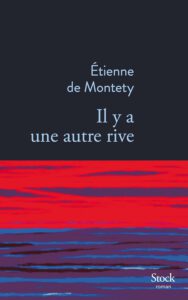
From Mediana to Saint-Sulpice: Conversion and Interreligiousity as Narrative Principles in Étienne de Montety

Étienne de Montety's novel "Il y a une autre rive" (There is another shore) (2026) tells the story of Rahman, the Parisian-born son of Algerian immigrants, who travels to Algeria after his father's death and undergoes a religious crisis that ultimately leads him to convert to Christianity. The novel thus realizes an interreligious poetics that does not pit Islam and Christianity against each other hierarchically, but juxtaposes them with ethnographic accuracy in their ritual, symbolic, and ethical dimensions – from the symmetrical depiction of death rites and baptism to the subterranean intertwining of prayer practices in a single space. The essay examines how Montety realizes this plural narrative through several interlocking techniques: through personal focalization on Rahman's changing perspective, through the spatial structure between Médéa and Paris, through the constellation of characters from Ibrahim to Jean-Marie Bazin, through concrete scenes of religious confrontation, and finally through an imagery of light, water, and crossing that depicts conversion not as a break, but as a translation. The central question is how a novel contradicts a disembodied digital modernity through the radical reclamation of love – "Je l'ai fait par amour" (I did it out of love) – and what it means that, as the title suggests, there is still "another shore.".

To the article
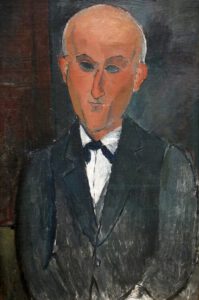
Max Jacob von Modigliani, um 1916–1917.

Max Jacob Between Transfiguration and Official Report: Philippe Douroux and Olivier Rasimi

Max Jacob (1876–1944) was a poet, painter, and one of the central figures of the Parisian Bohemian scene in Montmartre, where, in existential poverty and spiritual proximity to Picasso, he revolutionized the prose poem and developed a poetics of dreams, chance, and mystical vision between Judaism and his Catholic conversion with works like *Le Cornet à dés*. The review contrasts two books from 2026 that begin from the same historical point – Max Jacob's arrest and death in the Drancy internment camp – but unfold radically divergent modes of representation: Olivier Rasimi's *Saint Max*, in an achronologically structured, stream-of-consciousness narrative, crafts a hagiographically grounded internal perspective that interprets Jacob's life and death as a mystically charged crucifixion. In contrast, Philippe Douroux's *Max Jacob et le jeune SS*, as a documentary double biography, intertwines the poet's life with that of a later SS volunteer, formulating a historical-political indictment through archival research, found letters, and administrative traces. The review systematically elaborates this opposition, arguing that both texts answer the same fundamental question – how a death between religious meaning-making and industrial mass murder can be narrated – with opposing means. Rasimi's aesthetic transfiguration tends to spiritualize violence, while Douroux's file-based reconstruction, conversely, transforms experience into evidence, so that only in their contrasting juxtaposition do their respective blind spots become visible: here, the danger of theologizing historical violence; there, the reduction of existential dimensions to documentary factuality. The review's strength thus lies in the precise narratological and epistemological mediation of this difference, through which literary form itself becomes comprehensible as an epistemic instrument.

To the article

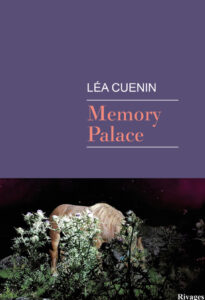
Palace That Walks Itself: Ars Memoriae in Léa Cuenin's Work

A flooded Baltic coast, a peaty plateau in Silesia, an abandoned rocket between rusting antennas and nesting seagulls: In Léa Cuenin's debut novel "Memory Palace" (Rivages, 2026), four women and a watchful artificial intelligence encode the last archives of a dying humanity onto plant DNA, preparing to launch them into space in ten, later eleven, metal capsules. Between the countdown and flashbacks, between a tooth, a bone fragment, and a blood-soaked feather, unfolds a book that tells of loss, tenderness, and the question of whom to entrust your memory to when no one is left to read it. This essay reads the novel as what its title literally promises: a memory palace. It tracks how the ancient method of loci—linking knowledge to concrete, walkable places—travels through all the scales of the novel: from the base as architecture, to the metal capsule, to the nanodisk chain, to the brain implant, and, 3.5 million years later, into the body of an alien being. The character constellations and gender orders, narrative perspective and forms of communication, temporal structure, metaphors, and the autopoietological self-reference of a machine bearing the same name as the book it inhabits are examined. In doing so, the novel clearly enters into dialogue with literary role models: with the speculative prose of Céline Minard and Ursula K. Le Guin, as well as, through the framed dedication quotes, with Sappho's fragments and the pathos of loss in "Blade Runner.".

To the article

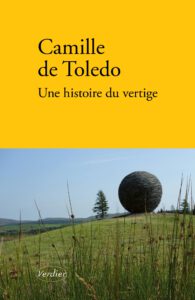
The Earth's Vertigo: Camille de Toledo

The overview of Camille de Toledo’s work—under the guiding concept of "Vertige"—unfolds a diagnosis of the present that is as much literary as it is epistemological, and which the review characterizes as a genuinely ecological figure of thought: Taking as its starting point the sensually perceptible reality of recurring heat waves, "vertigo" is interpreted not as merely subjective unease, but as a symptom of a destabilized Earth whose geophysical and semantic foundations are eroding simultaneously. The review’s argument follows a dual trajectory, which it identifies as structuring Toledo’s entire body of work: on the one hand, the introspective-poetic reflection on language as an unstable foundation (particularly in "L’inquiétude d’être au monde" and "Une histoire du vertige"), and on the other hand, the institutional translation of this crisis into legal and political forms (primarily in "Le fleuve qui voulait écrire" and "L’internationale des rivières"). The review interprets these two strands not as progress, but as a pendulum swing: "Vertige" functions simultaneously as a poetological category (the instability of signs, the "pharmakon" of language) and as an ethical-political imperative that demands new forms of recognition for nonhuman actors. Particularly striking is the thesis that Toledo does not narratively domesticate the ecological crisis, but rather formally reproduces it: The hybridity of genres, the shift from monological speech to polyphonic listening, and finally to speculative "fiction instituante" appear as aesthetic counterparts to a state of the world in which "the ground is slipping away." The review interprets this formal dynamic as a conscious rejection of any "consolation" and thus as an alternative to apocalyptic or technicist climate narratives; instead, a "poetics of endurance" emerges that does not dispel the vertigo but renders it productive—whether in the literary self-questioning of the "homo narrans" or in the vision of a justice that grants rivers a voice and the power to act. Overall, the argument is compelling due to its close interweaving of textual analysis, genre theory, and ecological hermeneutics: it demonstrates that Toledo’s work not only deals with climate change but also enacts its epistemic demands at the level of form, language, and institution.

To the article

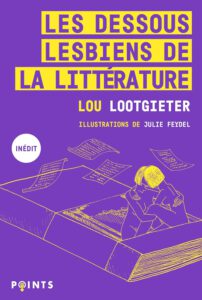
Lesbian Literature as a Method: On Lou Lootgieter's Subjective Cartography of the Hidden

Lou Lootgieter's collection "Les Dessous lesbiens de la littérature" (2026) presents a deliberately subjective, non-chronological mapping of lesbian writing styles through 29 Francophone texts from the 19th century onwards, combining journalistic research, interviews, and close readings. At its core are recurring strategies through which female authors articulate lesbian desire under conditions of censorship and invisibility. For instance, Lootgieter reads Rachilde's "Monsieur Vénus" (1884) as an early figuration of „monstrosity“ as a cipher for still-unspeakable desire, while interpreting Monique Wittig's "L’Opoponax" (1964) as the grammatical neutralization of gender as a literary „Trojan horse.“ Using examples such as Amélie Nothomb's "Stupeur et tremblements" (1999), whose homoerotic tension was ignored by contemporary criticism, or Violette Leduc's censored boarding school narrative "Thérèse et Isabelle," the volume demonstrates how strongly reception and publication history contribute to making lesbian writing invisible. At the same time, the perspective shifts over the course of the four chapters from techniques of obfuscation to open political positions, as seen in Constance Debré's "Love Me Tender" (2020), which explicitly rejects heterosexuality as a social regime. Theoretical references—from Judith Butler and Monique Wittig to Paul B. Preciado—remain deliberately fragmentary and are used more as a space for resonance than as a systematic framework. Furthermore, the relationship with male homosexuality, intra-feminist lines of conflict, and questions of trans inclusion and exclusion are also selectively negotiated alongside these themes. The review highlights these tensions between a wealth of material and a lack of methodological synthesis, as well as the collection's value as a resource of previously marginalized texts, reception documents, and conversational perspectives for future literary scholarship.

To the article

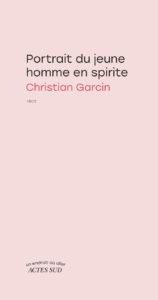
Autofiction, Time Warp, and the Origin of Writing: Christian Garcin

The review interprets Christian Garcin's "Portrait of the Young Man as a Spiritualist" (Actes Sud, 2026) as a multi-layered autofictional work that transforms a seemingly occult experience – séances with his deceased father – into a poetological origin story of his own writing. The focus is less on the reality of the supernatural and more on the self-reflective questioning of an author who traces his literary calling back to an ambivalent experience, oscillating between belief and skepticism. The complex temporal structure (1980s, writing in 2001, publication in 2025), the dialogical interview format, and the interweaving of memory, essay writing, and intertextual references create a dual movement of distancing and self-assurance. Here, spiritualism appears as a metaphor for mediality in a broader sense: as a model for how writing emerges from the mediation between the absent and the present. Ultimately, the review reads the text as literary mourning work, in which the figures of father and mother become poetological threshold figures, and openness to the „unexplained“ is asserted not as an epistemological deficit but as a productive condition of literature.

To the article

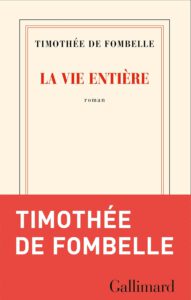
A Whole Life Every Day: Dictation and Poetry in Timothée de Fombelle

In Timothée de Fombelle's „La vie entière“ (Gallimard, 2026, German edition by dtv in October 2026), nineteen-year-old Claire waits one night in her attic room in occupied Paris for Blanche, the leader of her Resistance network, whom she has fallen in love with without ever telling him. When he overshoots the agreed deadline, she stays sitting at her typewriter, against her own safety rule, and begins to write herself a whole, unlived life—children, a seaside vacation hotel, a shared old age—interwoven with real memories of her underground work, of the courier boy Émile, the forger Rosine, the suspicious neighbor, and the arrests of the summer, until finally footsteps are heard on the stairs, leaving it open whether she herself is arrested, while the text instead jumps to a distant future where an aged Blanche finds and reads her hidden pages. The essay on this slim novel by Timothée de Fombelle unfolds its thesis from this construction: that historical facts and subjective, unverifiable experiences claim the same degree of reality as soon as both are written in the same sentences and tenses. It pursues this idea through genre classification, character constellation, forms of communication, narrative perspective, plot, space and time structure, imagery, gender order, poetics, autopoetological reflection, and intertextual reference to Etty Hillesum, ultimately showing in a comparison of the beginning and end that the novel does not replace reality with fiction, but assigns equal permanence to both beyond the uncertain outcome of the night.

To the article

Treasure trove

"For anyone interested in aesthetic debates and contemporary literature from France and French-speaking countries, the blog ‚Rentrée littéraire‘ is an invaluable treasure trove.

Kai Nonnenmacher founded the German-French platform in 2022. He teaches Romance Culture and Literature Studies in Bamberg and publishes reviews of new French publications on his blog."

Sigrid Brinkmann on July 6, 2026 in Deutschlandfunk, Book market.

Continue reading

Dieser Beitrag ist auf Deutsch verfasst unter https://rentree.de. Es existieren automatische Übersetzungen in englischer and französischer Sprache.

Gabriel Attal's Confession Book as a Candidacy Kick-off

The review reads Gabriel Attal's "En homme libre" (2026) as a paradigmatic case of the French „book candidacy“ and traces how a political biography, from its beginnings at the local level to presidential candidacy, is staged simultaneously as self-interpretation and programmatic proposal. Starting from the dramatically set caesura of the parliamentary dissolution in 2024, the book unfolds, through a non-linear dramaturgy, origin, rise, and identity narratives—from familial influences between Jewish-atheist and Orthodox heritage through the institutional career in ministries to the short tenure as prime minister—and translates these into a political credo that mobilizes individual experience as justification for a „new republican“ project. The analysis highlights how Attal intertwines intimate confessions (such as his same-sex partnership, religion, and biographical breaks) with strategic self-positioning, how distance and continuity from Macronism are rhetorically balanced, and how a programmatic core becomes visible that combines liberal economic, socially progressive, and authoritarian law-and-order elements. At the same time, Attal's self-portrayal is read against the backdrop of an already highly differentiated field of candidates—from centrist rivals like Édouard Philippe to representatives of the radical left like Jean-Luc Mélenchon to dominant figures of the far-right like Jordan Bardella—making the book appear not only as an individual self-description but as a strategic positioning within an increasingly polarized election campaign. The focus is thus on the double face of the text: as a literaryized life story that claims authenticity, and as an implicit campaign platform that narratively prepares and politically justifies the claim to the presidency.

To the article

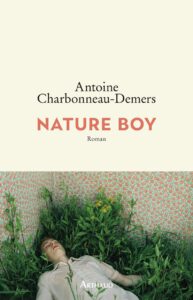
Between Manure and Glamour: Nature as an Imposition in Antoine Charbonneau-Demers

Antoine Charbonneau-Demers’ novel "Nature Boy" (Flammarion, 2026) unfolds a multi-layered narrative of illness, social determinism, and the violence of the promise of upward mobility against the backdrop of a contaminated Quebec rural milieu. At its center is the Torchaud family, whose members—primarily Lyne and her nephew Karl—are crushed between ecological contamination, physical decay, and imaginary escapes to a supposedly better life. The plot first follows Lyne's youth, shaped by illness and fantasies of upward mobility, and later shifts to Karl, who follows in his aunt's footsteps to the USA, where—not least through his encounter with a grotesquely exaggerated Thoreau figure—he falls into a natural and freedom promise that is as violent as it is illusory. Both narrative threads culminate in a coma, where failed life plans transform into a final, hallucinatory fantasy of triumph. The novel intertwines social satire, body horror, magical realism, and bildungsroman into a radical aesthetic of the abject, in which nature appears not as a place of regeneration, but as a zone of disgust, infection, and exploitation. The review argues that "Nature Boy" uses this poetics to expose the construction of beauty, authenticity, and freedom as privileges of the wealthy, while the underprivileged remain trapped in the „filth of reality.“ The analysis of narrative structure, spatial and temporal regimes, and central motifs such as contamination, escape, and appropriation reveals the novel as a ruthless diagnosis of social conditions, whose only way out lies in the paradoxical triumph of the coma—a final, hallucinatory form of freedom.

To the article

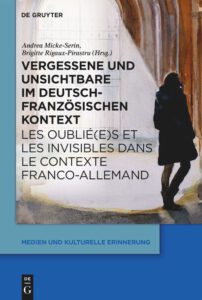
Read from the Edge: German-French Mediators, Victims, and Sites of Memory in the 19th and 20th Centuries

The collected volume "The Forgotten and the Invisible in the German-French Context of the 19th and 20th Centuries" (De Gruyter, 2026), edited by Andrea Micke-Serin and Brigitte Rigaux-Pirastru, examines actors, works, and events that have largely disappeared or been marginalized from German-French memory culture, using a shared memory theory approach. The interdisciplinary contributions from literary, cultural, art, and historical studies range from Federica D'Ascenzo's study of the writer Édouard Dujardin to Philippe Wellnitz's analysis of the rediscovered bookseller and author Françoise Frenkel, and Moritz Schertl's investigation of Patrick Modiano's Dora Bruder, to Andrea Micke-Serin's reconstruction of the biography of the Prussian adventurer Carl Jäger (Caïd Osman). Further contributions are dedicated to, among others, the stained-glass artist Heinrich Ely, the football official Willy Scheuer, the rabbi Moses Nordmann, the politician Salomon Grumbach, the forgotten deportees of the Ravensbrück concentration camp, and Franco-East German relations during the Cold War. The volume impressively demonstrates how national memory cultures systematically marginalize transnational biographies and border crossers, and opens up new perspectives on German-French cultural and memory history.

To the article

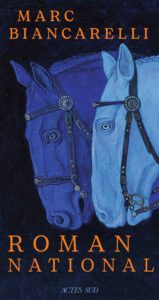
Im Schatten der Helden: Marc Biancarellis Antwort auf den korsischen Nationalmythos

Marc Biancarellis "Roman national" (Actes Sud, 2026) entwirft im Gewand des historischen Romans ein komplexes Bild Korsikas als „doppelte Insel“, die zugleich durch äußere Herrschaft unterworfen und durch innere kulturelle Ressourcen behauptet wird: Vor dem Hintergrund des Aufstands Sampieru Corsos im Jahr 1564 verfolgt der Text die Lebenswege Fioravantes und Catalinas, die zwei gegensätzliche Antworten auf eine Gesellschaft ohne stabile politische Institutionen verkörpern – Bindung an lokale Loyalitäten und Rachelogiken einerseits, radikale Ablösung und Selbstentwurf andererseits; in drei erzählerischen Bögen (Kindheit, Kriegsgeschehen, Nachklang) verbindet Biancarelli dokumentierte Ereignisse mit subjektiven Perspektiven und unterläuft dabei systematisch die Erwartung eines heroischen Nationalepos, indem er zeigt, dass der vermeintliche Befreiungskampf weniger von kollektiven Idealen als von privaten Motiven getragen wird und letztlich an innerer Zerrissenheit scheitert; die Argumentation des Romans zielt damit auf eine Dekonstruktion des „roman national“ als Gattung, indem nationale Identität als nachträgliche, selektive Konstruktion sichtbar wird, die insbesondere die Gewalt an Frauen ausblendet – ein blinder Fleck, den die zentrale Figur Catalinas explizit macht –, während zugleich die Sprache, konkret das Korsische, als eigentlicher Träger von Kontinuität und Widerstand herausgestellt wird, der sich staatlicher Kontrolle entzieht; formal entspricht dieser These eine polyphone Erzählstruktur ohne privilegierte Instanz, die Geschichte als Feld konkurrierender Stimmen präsentiert, während inhaltlich eine Anthropologie der Gewalt entfaltet wird, die diese nicht als Ausnahme, sondern als zirkulierendes Prinzip sozialer Ordnung begreift; in dieser Perspektive erscheint Catalinas Bewegung der Ablösung als einzige nicht destruktive Handlungsform, sodass der Roman insgesamt als paradoxer Nationalroman lesbar wird, der die Bedingungen kollektiver Identitätsbildung freilegt, indem er sie zugleich erzählerisch unterläuft.

To the article

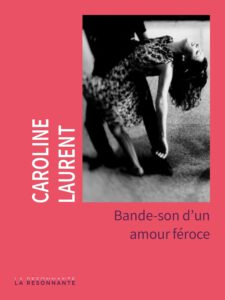
Ferocity, Class, Body: The Female Gaze in Caroline Laurent, Benoîte Groult, Éric Holder, and D. H. Lawrence

The article examines four love stories in which women desire men from significantly lower social classes or backgrounds, making a precise shift visible: women look at men. The focus is on the novels by Caroline Laurent (2026), Benoîte Groult, D. H. Lawrence, and Éric Holder, with a side glance at Annie Ernaux. However, their desire is never abstract but always tied to the body: to arms, hands, backs, to skin, work, movement. While Lawrence still stylizes the gamekeeper's body as an almost mythical source of vitality and redemption, and Groult embeds it in a long, ultimately unbridgeable class difference, Holder shows it in its quiet materiality—as a marked, working body that scarcely has words for itself. Laurent's novel goes further: here, the male body is observed with a precision that neither glorifies nor excuses, but simultaneously desires and analyzes. This is precisely the argumentative point of the article: the „female gaze“ is not a simple inversion of the traditional gaze regime, but a contradictory practice in which desire, social conditioning, and self-reflection overlap. Although love crosses the boundary between classes, it does not abolish it; rather, it makes it visible on the body itself. In the end, the focus shifts once more: what is decisive is not the fulfillment of the relationship, but the writing about it—as an act that captures the experience, sharpens it, and gives the female gaze its own sovereign form.

To the article

Water, Heat, Depth: On the Poetics of the French Summer Novel

This article was written at 37°C. It brings together sixteen recent French-language novels into a polyphonic topography of water—from Parisian public swimming pools to private pools and North American residential complexes, all the way to lake landscapes and the coasts of the Atlantic and the Mediterranean. In vivid scenes—the hesitation on the five-meter board, an elderly man’s first plunge into the water after decades, sitting motionless at the edge of an unused pool, or the exhausted resurfacing after a long swim in the ocean —water becomes tangible as a fundamental bodily experience: cooling, buoyant, resistant. The texts show how, in the moment of bathing, social orders shift and simultaneously become visible: bodies become legible; class differences, desires, and exclusions come to light, while the water creates, for a few moments, an equality that immediately crumbles again on land. - At the same time, the wet element functions as both a repository and a trigger for memory: the smell of chlorine, salt on the skin, or the recurring blue of a pool evoke childhood, first love, or experiences of loss. Time and again, the novels return to adolescence, to moments of initiation during a summer in which a leap into the water determines one’s sense of belonging, or a failure to leap marks a turning point in life. Other texts depict water as a site of existential borderline experiences—as a space for coping with grief, illness, depression, or the confrontation with death, where language fails and only the body can react. Between the public swimming pool, which functions as a social microcosm, and the open sea, which embodies indifference and overwhelming power, a poetics of water thus unfolds that neither reduces the element to a metaphor nor leaves it purely naturalistic: It is at once a concrete substance and a resonant space in which life becomes concentrated. Summer appears here as an accelerated, heated temporal form in which, through contact with water, transitions take place—between childhood and adulthood, closeness and loss, control and loss of control—and in which the characters are, for a moment, both laid bare and withdrawn from themselves.

To the article
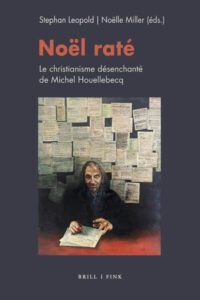
Holy Saturday without Resurrection: Michel Houellebecq and De-enchanted Christianity

"Failed Christmas. Michel Houellebecq's Disenchanted Christianity," edited by Stephan Leopold and Noëlle Miller, comprises twelve contributions and a postface that interpret Houellebecq's work from various perspectives as an engagement with a persistent Christianity stripped of its certainty of salvation. Starting with the Christmas motif as a cipher for failure, the contributions unfold an interpretative field that ranges from questions of authorship and performativity to the religious structure of consumer capitalism, the problems of social cohesion, and the motifs of love, pity, and transcendence. The volume combines literary, religious-philosophical, and cultural-sociological approaches to offer a coherent interpretation of the oeuvre as a „Holy Saturday without Resurrection,“ in which Christian forms and symbols persist without being redeemed by positive faith content. Despite some redundancies and at times extensive christological typologization, the collected volume opens an interpretatively ambitious and methodologically diverse perspective on the religious content of Houellebecq's work, while simultaneously formulating questions that extend beyond Houellebecq research to the analysis of contemporary forms of literary disenchantment.

To the article

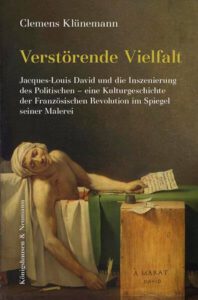
The beautiful illusion: the uncomfortable truth about David's political art

In his book on David, "Disturbing Diversity: Jacques-Louis David and the Staging of the Political – A Cultural History of the French Revolution Reflected in His Painting," Clemens Klünemann offers a culturally and historically informed re-evaluation of Jacques-Louis David, consistently freeing the painter from the role of a passive „witness of his time“ and highlighting him as a central actor in the political image production of the French Revolution. Using key works, he demonstrates how David, through a deliberately employed aesthetic of „smooth beauty“ and heroic clarity, co-shaped a novel public sphere in which political events were not merely depicted, but powerfully staged. Klünemann understands David's painting as part of a comprehensive „aestheticization of the political,“ which made it possible to translate the complex and contradictory dynamics of the era into concise, collectively relatable visual formulas. He emphasizes that David's ability to adapt to changing regimes – from the Ancien Régime through Jacobinism to the Empire – is to be understood less as mere opportunism and more as an expression of a specific artistic logic aimed at creating political presence and evidence. Klünemann's analysis of the iconographic strategies by which David placed religious image traditions in the service of revolutionary meaning-making, thus generating emotional and symbolic binding power, is particularly striking. Overall, the book reads as a reconstruction of the close entanglement of art, power, and the public, presenting David as a key figure of an era in which images became crucial vehicles of political significance.

To the article

Jewish-Arab Coexistence as Family Chronicle: Pierre Hazan

Pierre Hazan's "Les Juifs, les Arabes, ma famille et moi" (2026) unfolds a literary and historiographical project through an extensive family history. In seven genealogically organized chapters, the book reconstructs the vanished reality of Jewish-Arab coexistence in the Eastern Mediterranean and contrasts it with the rigid identity logics of the 20th century. Starting with figures such as a 19th-century Sephardic rabbi, a simultaneous Egyptian nationalist and Zionist, or the last Jewish voices of Egypt, Hazan combines archival material, fragmented memories, and contemporary encounters with Israeli and Palestinian actors. From this, he develops three central theses: that coexistence was a historically lived practice, that its destruction stemmed from competing nationalisms, and that the mutually suppressed traumas – the expulsion of Jews from Arab countries and the Nakba – are inextricably intertwined. The book thus positions itself as an intervention in the present-day politics of memory and as a plea to rethink hybridity not as an exception, but as a lost historical normality.

To the article

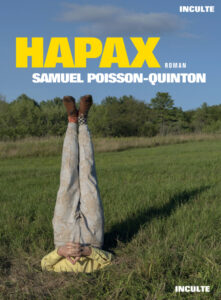
The unique word: Samuel Poisson-Quinton

Samuel Poisson-Quintons Roman "Hapax" (Actes Sud / Inculte, 2026) erzählt von einem Pariser Möchtegern-Schriftsteller, der nach dem Tod seines Vaters und dem Verlust seines Erbes in eine Krise aus Trauer und Sprachverlust gerät, während er zugleich in einer politisch deformierten, autoritär ökologisch umgebauten Stadt lebt und eine intensive Fernbeziehung zu der Reiterin Artémise entwickelt; die episodisch-groteske Handlung – von Beerdigung und Enteignung über absurde Begegnungen bis zu Verhaftung und Verhör – kulminiert in der Offenbarung von Artémises Schwangerschaft, wodurch sich der Kreis von Tod und Geburt schließt und die Erfahrung existenzieller Wiederkehr gegen die formale Linearität gestellt wird. Die Rezension argumentiert, dass die Oulipo-Contrainte des Romans – kein Wort darf wiederholt werden – nicht bloß formales Experiment, sondern strukturbildendes Prinzip ist, das sämtliche Ebenen durchdringt: Stil (Synonymketten, Registerwechsel), Handlung (groteske Episoden als Folge sprachlicher Not), Figurenkonzeption (Verschwinden statt Wiederkehr) und Poetik (Selbstreflexion der Regel). Dabei tritt ein prägnanter Gegensatz hervor zwischen der oft derb-komischen, grotesk übersteigerten Ereignisfolge und dem archaisch-erhabenen, bewusst künstlichen Sprachregister, das diese Banalitäten pathetisch überhöht und zugleich ihre Lächerlichkeit exponiert. Zentral ist die These eines produktiven Selbstwiderspruchs: Während das sprachliche Gesetz jede Wiederholung verbietet, insistiert die erzählte Welt auf zyklischen Mustern (Trauer, Begehren, Generationenfolge), sodass der Roman notwendig auf seinen eigenen Bruch zusteuert, der im bewussten Regelverstoß der Schlusszene eintritt. Der Aufsatz liest diese Kollision als Allegorie auf Vergänglichkeit und Wiederkehr und deutet die Contrainte als poetische Entsprechung von Trauerarbeit: Das erzwungene Erfinden immer neuer Wörter für denselben Referenten wird zum sprachlichen Analogon eines Verlusts, der sich nicht wiederholen lässt und doch ständig wiederkehrt.

To the article

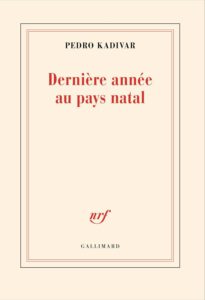
Impressionismus als Widerstand: Pedro Kadivar

Pedro Kadivars Roman "Dernière année au pays natal" (Gallimard 2026) erzählt das letzte Schuljahr eines Jugendlichen im iranischen Schiras des Jahres 1982 – gegliedert in vier Jahreszeiten, vom melancholischen Herbst über den erstarrten Winter und einen gefährlichen Frühling bis zum Sommer des Abschieds – und verschränkt diese erlebte Vergangenheit mit der erinnernden Rückschau eines Exilanten im heutigen Berlin. Auslöser ist das Foto eines als Märtyrer inszenierten toten Schulkameraden, das im Schulkorridor hängt und den Erzähler Jahrzehnte später als Heimsuchung wieder einholt. Die Interpretation deutet den Impressionismus – als Wahrnehmungsweise wie als Kompositionsprinzip des Romans – als die eigentliche politische Haltung gegen ein totalitäres Regime. Diese These wird auf mehreren Ebenen plausibilisiert, die sich gegenseitig stützen: strukturell über die Jahreszeitengliederung, die innere Reifung statt politische Chronik artikuliert; bildtheoretisch über die zentrale Opposition zwischen dem Propagandafoto des Toten und der lebendigen Malerei über eine Galerie von Malern (Cézanne, Van Gogh, Mondrian, Hockney), die ein verstecktes Bildungsprogramm des Sehens bilden; und über das namenlose, sensorisch beschriebene Begehren zwischen dem Protagonisten und dem Bruder des Toten, das jeder ideologischen Klassifizierung entgeht. Die ästhetische Form wird dabei gegen die Ideologie gelesen – gegen Eindeutigkeit, Abstraktion, Teleologie und Lärm –, weil er die Einzelbeobachtungen zu einem Prinzip bündelt: Ein Roman, der die einheitliche Perspektive verweigert, öffnet einen Raum der Freiheit. Das unwillkürliche Erinnern wird als traumatische Variante der Proust'schen "mémoire involontaire" gefasst. So zeigt sich, wie kohärent der Roman seine ethische Grundfrage beantwortet: wie man seine Seele in einer zerfallenden Welt rettet, nicht philosophisch, sondern durch die Präzision des Sehens und die Verwandlung von Erfahrung in Form.

To the article